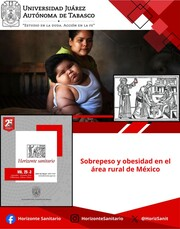
Overweight and obesity in rural areas of Mexico
DOI:
https://doi.org/10.19136/hs.a25.3.6249Abstract
Objective: To analyze the socioeconomic and health variables that determine the condition of excess weight in the inhabitants of rural Mexico.
Materials and methods: Based on the National Health and Nutrition Survey (NHNS) 2018, the Body Mass Index (BMI) of the inhabitants was calculated, and they were grouped by age to later estimate the multinomial logit models and marginal effects that would allow identifying which variables have influenced overweight and obesity.
Results: In children, the age and schooling of the mother explained the probability of being both overweight and obese by 1%. In young people, overweight was explained by tobacco consumption (21%) and 11% by concern about gaining weight; while in obesity it was related in 6% to concern about weight gain. In adults, being overweight was associated with being a woman and depression; obesity was more likely in men. Finally, in older adults, overweight was more likely in women (12%) and obesity in men (18%), as well as depression (5%), not receiving government support (3%) and alcohol consumption (10%).
Conclusions: The role of mothers has small but significant impacts on the excess weight of children and young people. The health conditions of rural households are related to the dynamics within the home in terms of the decisions or strategies of food purchases made by those in charge of the household, depending on the number of members and available resources.
Keywords: Body Weight; BMI- age; Rural areas.
Downloads
Downloads
Published
Issue
Section
License
Copyright (c) 2026 Horizonte Sanitario

This work is licensed under a Creative Commons Attribution-NonCommercial-ShareAlike 4.0 International License.